
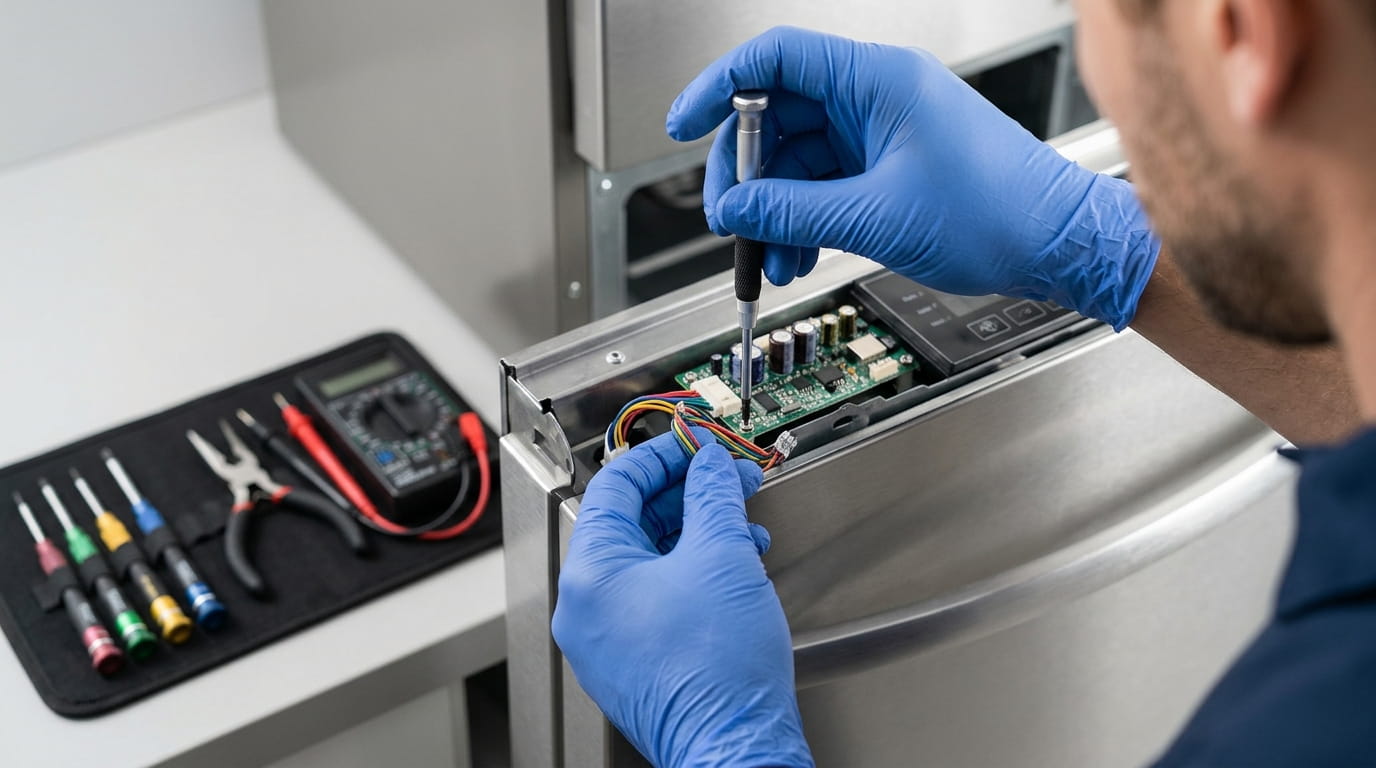
A broken washer or oven puts you in a weak position. You need the appliance fixed, and you rarely know what a repair should cost. That gap lets unclear pricing cause trouble. Some homeowners agree to a verbal price and then find a much higher bill at the end. Others pay for repairs they never needed.
An upfront estimate closes that gap. It turns a vague promise into a clear agreement. You know the price, the scope of work, and the terms before the technician opens a toolbox. This guide explains what a good appliance repair estimate Tucson shops provide should include, what drives the cost, and how to spot warning signs. You will leave with the confidence to ask the right questions and approve work only on your terms.
What an Estimate Is and What It Is Not
People often mix up three terms: diagnostic fee, estimate, and final invoice. Each one plays a different role.
A diagnostic fee pays for the technician’s visit and testing. It covers the time spent finding the problem. An estimate gives the price to fix the problem after the technician diagnoses it. It lists parts, labor, and taxes. The final invoice shows what you owe after the work ends.
A reliable shop keeps the estimate and the invoice very close. If the invoice rises, the shop should explain why and get your approval first. Ask the shop whether the estimate is binding or only a rough guide. A binding estimate protects you, while a rough guess leaves room for surprises. Always request the estimate in writing, even if the shop sends it by text or email.
What a Good Estimate Includes
A complete estimate leaves no room for guessing. Look for these items on every quote:
- Appliance details: brand, model number, serial number, and the problem you reported
- Cause of failure: a plain explanation of what broke and why
- Parts: the name, part number, and price of each part, and whether it is OEM or aftermarket
- Labor: the hourly rate or flat fee and the time the job should take
- Fees and taxes: any service fee, trip charge, disposal fee, or tax
- Total price: one clear number that covers everything
- Warranty: the length and terms for parts and labor
- Timeline: when the shop can finish the job, and when a back-ordered part will arrive
If an item is missing, ask for it. A transparent shop adds details gladly. A shop that avoids detail often has a reason.
What Drives the Cost of a Repair
Understanding the pieces helps you judge whether a quote is fair. Four factors shape the total.
The first factor is the part. A belt or a door gasket costs little, while a control board or compressor costs far more. The second is labor. Simple swaps take under an hour, but sealed system work or deep disassembly takes longer. The third is the brand and model. Premium and imported appliances often need specialty parts that cost more and arrive slower. The fourth is timing. Same-day, evening, and weekend visits may carry a premium.
Ask the technician which of these factors drives your quote. When you understand why the price lands where it does, you can compare an appliance repair estimate Tucson shops give you against another fairly.
Typical Pricing Structure in Tucson
Pricing varies by shop, so ask each company how it charges. Most use a mix of these models.
Some shops charge a flat service fee for the visit and then add parts and labor. Others charge an hourly rate after a minimum time. A third group offers flat-rate repairs for common problems, such as replacing a dryer belt. Flat-rate pricing makes the total easy to predict, so ask whether the shop offers it for your issue.
Most shops credit the service fee toward the repair if you approve the work. Others keep it either way. Neither approach is wrong, but you should know the policy before the visit. Ask about trip charges too, since a few shops add mileage for locations far from their base. A quick call before you book prevents a surprise at the door.
Questions to Ask Before You Approve a Repair
A few direct questions reveal whether a shop deserves your trust. Ask them at the time of the quote.
- Is this price final, or can it change?
- What happens if you find a second problem during the repair?
- Does the service fee apply to the repair cost?
- Are the parts OEM or aftermarket?
- What warranty covers the parts and the labor?
- How long will the repair take, and when will the part arrive?
- If I decline the repair, what do I owe?
Write down the answers or ask the technician to add them to the estimate. A good shop answers all seven without hesitation. If the person on the phone sounds irritated by your questions, take that as useful information.
Warning Signs of a Misleading Estimate
Most shops treat customers fairly, but a few use tactics that cost you money. Watch for these signs:
- A very low phone quote. The shop lures you in, then raises the price on site.
- No written estimate. A verbal promise gives you no protection.
- Pressure to decide immediately. Honest shops give you time to think.
- Vague wording. Phrases like “parts and labor” with no breakdown hide the details.
- A demand for full payment upfront. Most reliable shops collect payment after the work ends.
- Unrelated add-ons. Beware of extra repairs that you did not report.
A single red flag may come from a poor sales habit. Two or three together call for caution. When in doubt, pay the diagnostic fee, thank the technician, and get a second opinion.
How to Compare Two Estimates
Never compare totals alone. Compare the details line by line. Check that both quotes use the same part type, since an OEM part and a cheap aftermarket part make the totals look very different. Compare the warranty, too. A slightly higher price with a ninety-day warranty often beats a lower price with no guarantee.
Look at the labor time as well. One shop may estimate one hour, and another may estimate three. Ask each shop to explain the gap. Finally, check the cost against the price of a new appliance. A common guideline says to replace the appliance when the repair costs more than half the price of a new one. A trustworthy appliance repair estimate Tucson residents receive should help you apply that rule with real numbers.
When Repair Costs More Than It Should
Sometimes the estimate tells you to stop. If the quote comes close to the price of a new appliance, replacement likely makes more sense. The same applies to old machines with several worn parts. Fixing one part often exposes the next one.
Think about the age of the appliance. A ten-year-old refrigerator with a failed compressor rarely justifies a large repair bill. A three-year-old oven with a bad igniter does. Ask the technician for an honest opinion. A shop that tells you to replace the unit, even though it loses the repair job, shows integrity. Remember that a good estimate saves you money even when it leads you away from the repair.
What a Sample Estimate Looks Like
A clear estimate reads like a short receipt written before the work. The layout below shows how a good shop organizes the details. The amounts stay blank because prices vary by appliance and part.
| Line Item | Example Entry |
|---|---|
| Appliance | Brand, model, and serial number of your dishwasher |
| Problem found | Failed drain pump blocks water flow |
| Part | Drain pump, OEM part number listed |
| Labor | Flat fee or hours at the stated hourly rate |
| Service fee | Stated amount, credited toward repair if approved |
| Total | One final figure including tax |
| Warranty | Length of coverage on parts and labor |
Compare any appliance repair estimate Tucson shops send you against this layout. If your quote skips a row, ask the shop to fill it in. A well-prepared appliance repair estimate Tucson homeowners receive usually fits on a single page and takes the technician about five minutes to write. That short effort shows respect for your time and gives you a record you can use later. When a shop cannot produce even a simple written summary, treat that gap as a reason to keep looking for appliance repair estimate Tucson providers who put their prices on paper.
Tucson Factors That Affect Your Estimate
Local conditions shape how appliances fail, and that shapes the price. Summer heat stresses compressors, which raises the odds of costly refrigerator repairs. Hard water leaves scale in dishwashers and washers, which clogs valves and pumps. Desert dust blocks coils and vents. Monsoon power surges burn out control boards.
A local technician recognizes these patterns and quotes accordingly. Local shops also stock the parts that fail most often in the area, which shortens repair time and lowers the cost. When you request an appliance repair estimate Tucson technicians prepare after a local diagnosis, you get advice that fits your home, not a generic national script.
What to Do on the Day of the Visit
A little preparation speeds the process and sharpens the estimate. Clear the area around the appliance. Write down the brand, model number, and serial number, which you usually find on a label inside the door or on the back. Note the symptoms, including noises, error codes, and when the problem began.
During the visit, let the technician work, and ask questions once the diagnosis ends. Review the written estimate before you approve anything. Take photos of the failed part if the technician offers to show it. After you approve the work, keep a copy of the estimate, the invoice, and the warranty. These papers prove your terms if a problem returns. A clean paper trail also helps if you sell the home and want to show maintenance records.
Final Thoughts
An upfront estimate does more than give you a price. It builds trust between you and the shop. It shows that the company respects your budget and your time. It protects you from surprise charges and unnecessary repairs.
Before you hire anyone, ask for a written quote, compare the details, and confirm the warranty. Use the questions in this guide to keep control of the process. When you want clear numbers and straight answers, call a shop that stands behind its appliance repair estimate Tucson customers receive. Transparent pricing is the best sign of a repair company worth keeping.
Frequently Asked Questions
1. What should an appliance repair estimate in Tucson include?
A complete estimate lists the appliance model, the cause of failure, each part with its price, labor charges, service fees, taxes, the total price, and the warranty terms. It should arrive in writing before the work begins.
2. Is a diagnostic fee the same as an estimate?
No. A diagnostic fee pays for the visit and the testing. The estimate gives the price to complete the repair after diagnosis. Many Tucson shops credit the diagnostic fee toward the repair if you approve the work.
3. Are appliance repair estimates free in Tucson?
It depends on the shop. Some offer free estimates for simple jobs, while many charge a diagnostic or service fee. Ask about the fee and whether it applies to the repair when you book.
4. Can the final price differ from the estimate?
It can if the technician finds a second problem. A reliable shop stops, explains the issue, and gets your approval before adding cost. Ask whether the estimate is binding before the work starts.
5. How do I know whether an estimate is fair?
Compare it with at least one other written quote, check the part type and the labor time, and weigh the total against the price of a new appliance. A fair quote breaks costs into clear lines.
6. What does a typical estimate cost depend on?
The price depends on the failed part, the labor time, the brand and model, and the timing of the visit. Control boards and sealed systems cost more than belts, gaskets, or igniters.
7. Should I get a second estimate?
Get a second estimate when the repair costs more than a few hundred dollars or when the first quote feels unclear. Pay only for a diagnostic fee, and compare the line items, parts, and warranty.
8. What warranty should come with a repair estimate?
Most reliable shops guarantee parts and labor for 30 to 90 days, and some offer longer coverage. Confirm the terms in writing and ask what the warranty includes and excludes.
9. What are red flags in an appliance repair quote?
Red flags include a very low phone quote, no written estimate, vague wording, pressure to decide immediately, and a demand for full payment upfront. Two or more together mean you should call another shop.
10. Should I repair or replace based on the estimate?
Replace the appliance if the repair costs more than half the price of a comparable new model, or if the unit is near the end of its lifespan. Repair it when the cost is lower and the appliance is relatively young.